I lead the teams that run production, and I direct AI to build governed tools for compliance, monitoring & IT operations.
Currently leading three DevOps teams (11 directs), globally distributed. Own the CI/CD and release platforms: TeamCity, ProGet, Octopus Deploy, Bitbucket. Fifteen-plus years of infrastructure and operations leadership; twenty-six years hands-on across systems, networks, storage, disaster recovery, code and cloud.
I apply existing foundation models — I don't train them. The value isn't the model; it's the guardrails, evidence, and human-in-the-loop wrapped around it.
I lead the people who run production.
Systems Operations / DevOps Manager. Three teams, 11 directs, globally distributed. I own the CI/CD and release platforms: TeamCity, ProGet, Octopus Deploy, Bitbucket. Recent programs include a 13-month TeamCity modernization, with artifact-repo migration and security-visibility rollout in flight. Hybrid infrastructure at scale: Hyper-V, zero-downtime cluster work, disaster recovery.
Leadership seats
IT Manager, Don-Nan Pump & Supply. IT Infrastructure Manager, Healthtrackrx. Service Desk Manager, CARD. IT Manager, California Health Sciences University (reported to the COO).
Platforms & delivery
CI/CD and release ownership. TeamCity modernization. Artifact repository migration. Security-visibility rollout. DR and hybrid infrastructure.
B.S. Information Technology
Security Emphasis, Western Governors University. ITIL 4 Foundation, CompTIA Project+, CCNA, MCSE, MCITP.
Context and imagination are the multiplier.
Early in my career someone handed me the old warning: "jack of all trades, master of none." It never sat right — I like understanding how the whole machine fits together, not living inside one command line all day. Turns out that quote is only half finished. The full version is a compliment: "…but oftentimes better than a master of one."
That missing half is the whole point. Frontier models can reason brilliantly, but they don't know your business. Your staff do. Context plus imagination is the multiplier — and a generalist who understands networks, storage, code, and the business is the one who can imagine what to build next, then actually build it.
If your task list hasn't changed in months, you don't have a tooling problem — you have an imagination shortage.

The proof is the method
I'm not a career software engineer — I've never held the title. I'm an infrastructure generalist who directs AI to build real, governed systems. Every project on this page, and the page itself, was built with Claude Code — I bring the architecture, the domain context, the guardrails and the judgment about what's safe to ship; the AI writes the code. That isn't a caveat. It is the thesis — context plus imagination, with AI as the multiplier — demonstrated in working software you can open and use.
Agentic Compliance Engine
A governed AI operations command center: an AI layer that watches live infrastructure, reasons about what it sees with evidence, and takes bounded, human-approved action — without creating new security, compliance, or control problems.
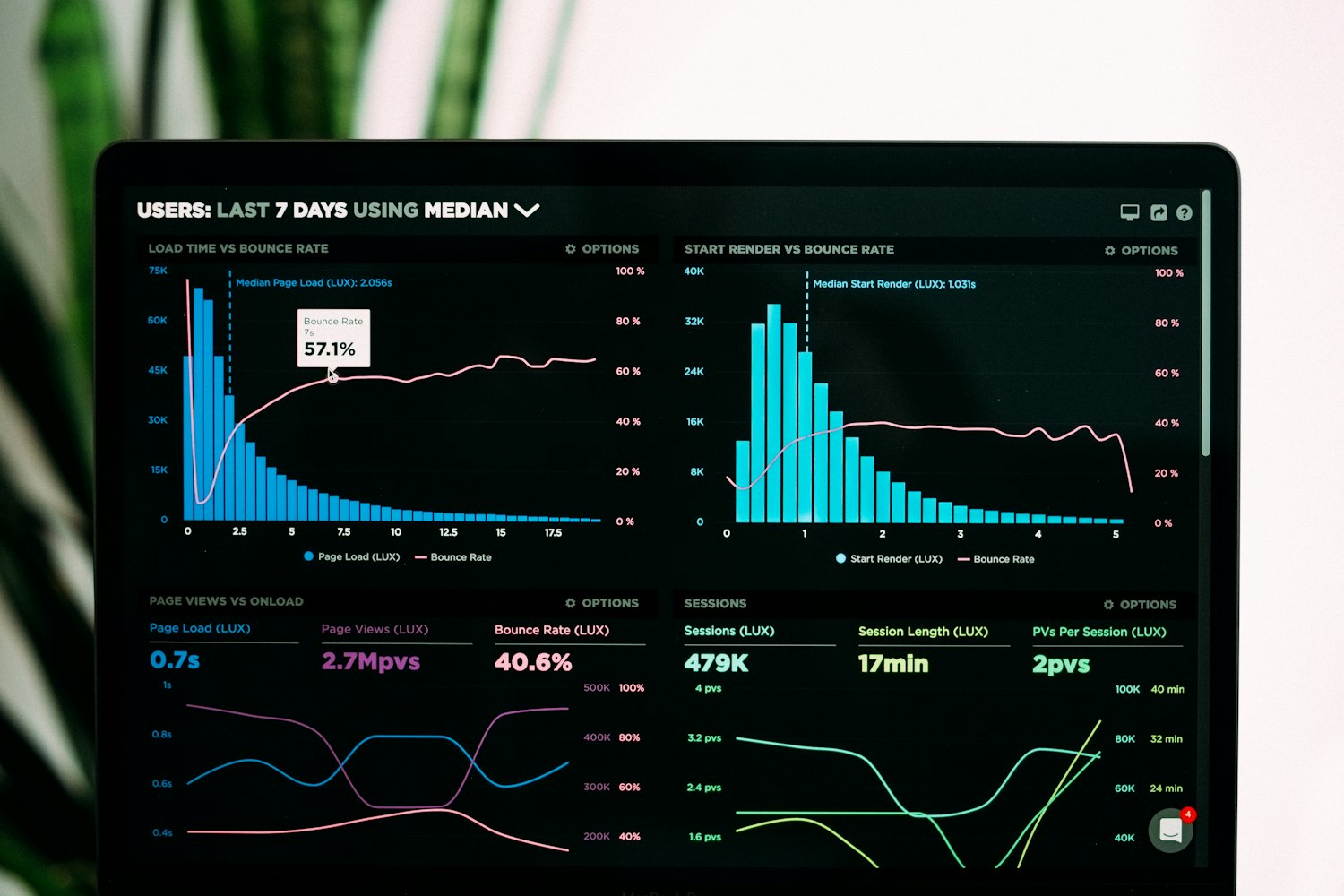 ⚠ Demo only · illustrative data
ace.mbfromit.com
⚠ Demo only · illustrative data
ace.mbfromit.com
ACE — the control plane, not the model
Built on existing foundation models and wrapped in guardrails so AI can safely help operate production systems.
Design it, ship it, monitor it, recover it.
I don't just prototype. The systems here run on real infrastructure I own and operate.
Governed AI tools I've built.
Two I can explain in a sentence and you can pick apart yourself — both aimed squarely at software-supply-chain security.
RatCatcher
AI-builtA cross-platform PowerShell forensic scanner that hunts a real npm supply-chain compromise across a machine's full kill chain — then has an AI triage every finding, so what reaches the dashboard is real threats, not noise. Confirmed hits require a named manager sign-off, creating an audit trail.
SBOM-Mapper
AI-builtA client-side SBOM visualizer that parses dependency manifests, cross-checks every package against OSV.dev for known vulnerabilities, and draws the dependency graph — with optional AI remediation guidance. Everything runs in the browser; the container is a hardened, read-only static host with an SSRF allowlist.
A working platform, not a portfolio of demos.
Behind the flagship is a real home-lab platform I design, direct and operate end-to-end. An AI Gateway proxies every app's model traffic through one governed choke point for cost tracking, usage analytics and compliance. A fleet of read-only MCP servers — fronted by one router — lets AI agents read and reason about the DevOps toolchain (CI, git, deploys, artifacts, monitoring) but never mutate it. Around them runs a full k3s cluster, CI/CD pipeline and disaster-recovery stack, plus experiments like DeepThink and OpenBrain agent memory. The point isn't any one repo — it's that I live in the whole loop.
Lead the operation. Modernize the platforms. Bring AI in safely.
Lead the people who run production
Three DevOps teams, 11 directs, globally distributed. CI/CD, release, DR, vendors, and the platforms those teams depend on.
Modernize the platforms
TeamCity, ProGet, Octopus Deploy, Bitbucket. Multi-month modernization programs, hybrid infrastructure, and disaster recovery you can actually fail over.
Bring AI into operations safely
Guardrails, policy gates, and human-in-the-loop. Proof you can open: ACE, RatCatcher, and SBOM-Mapper.